Aquaculture
Copper alloys in marine aquaculture are increasing productivity of operations
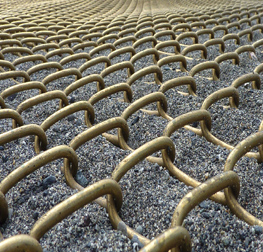
Due to its natural corrosion resistance, metallurgical and biological properties, copper alloy is a perfect material for both surface and submersible marine aquaculture enclosures for near- and off-shore sites.
Copper alloy mesh aquaculture pens improve the sanitary conditions, productivity and sustainability of operations for farmers raising salmon, trout, sea bream, sea bass, cobia, yellow tail and other species.
Long-lived and recyclable
Copper alloy mesh lasts for five years or more depending on application conditions. It loses little mass over time, and is fully recyclable. Recycled material is used in initial production of copper alloy mesh, which further reduces CO2 emissions, compared with traditional polymer nets. High-strength and corrosion-resistant copper alloy meshes are compatible with pens commonly used in the marine aquaculture industry, allowing for rapid implementation at existing grow out centres.
Excludes predators and prevents escapes
High-strength copper alloy fish cages resist predator attacks and reduce escapes of farmed fish. They have also shown resilience against extreme storms.

Maintains pen volumes
Copper alloy mesh allows pens to maintain their shape better in strong ocean waves and currents. Resultant improved pen volumes prevent fish crowding and help maintain high oxygenation that ultimately improves yields. The mesh also possesses high mechanical strength and formability, which is essential in the manufacturing of effective marine aquaculture containment structures.
Improves fish health and production
Copper alloy mesh naturally inhibits biofouling and limits the costs, fish stress and nuisance of net changes. The resulting increased water exchange and dissolved oxygen improves fish health and growth. Feeding costs can be reduced by 15%. The habitat for parasites and pathogens which infect fish is also much reduced.
Reduces maintenance
Cleaning is reduced and copper alloy meshes do not need to be removed in the process. This lowers diver hours and risk, as well as overall costs associated with maintenance.
Current use and future applications
Copper alloy mesh technology began in 1975 with small salmon farming enclosures in the north-eastern USA. Since then, alloy technology has evolved and is now being successfully used in Japan, Australia China, Korea, Canada, Scotland, Greece, Mozambique, and Chile, providing productive and sustainable solutions for fish farmers.